


Private Label Talc-Free Keratin Hair Fibers for Barbers
Private Label Talc-Free Keratin Hair Fibers for Barbers
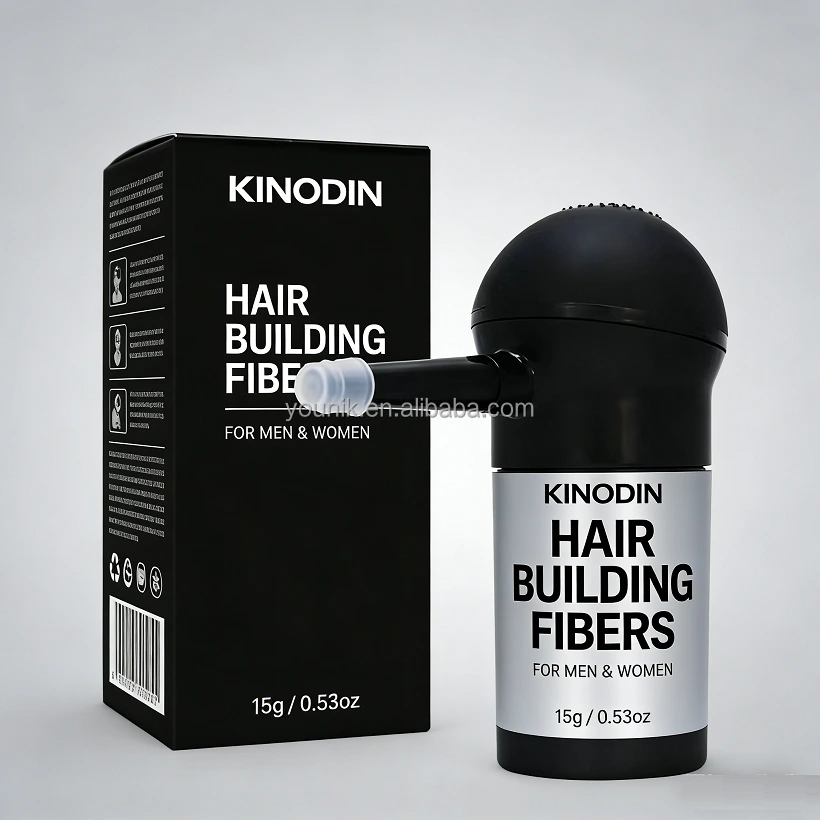
KINODIN develops private label talc-free keratin hair fiber projects for barber brands, salon suppliers, distributors and professional grooming retailers, subject to finished-formula verification. The product direction combines dry cosmetic fibers with controlled dispensing, clear shade identification and optional tools for crown, part, temple and hairline detailing where existing hair is present. Professional kits may include a sifter bottle, manual applicator, hairline tool, separately formulated hold spray or refill pack after each component is confirmed. The fibers provide temporary cosmetic coverage and a fuller-looking appearance; they are not a hair-loss treatment. Material identity, talc-free status, net content, shades, kit contents, claims and documents are approved before production.
A Conditional but Valuable Professional Product Page
This page can remain separate from KINODIN's standard private label hair building fibers page because it targets barber and professional-channel product development. Its value comes from a verified talc-free specification, controlled workstation dispensing, practical shade identification and coordinated tools—not from generic “men and women” wording.
The product is a temporary cosmetic hair concealer. It may support professional styling around visible scalp areas where existing hair is present, but it should not claim to treat hair loss, restore a hairline or produce new hair. Barber positioning describes the commercial channel and application system; it does not create a medical formula.
What “Talc-Free” Should Mean
A talc-free product statement should describe the complete approved finished formula, not just the principal fiber. Review should include the fiber material, pigments or colorants, processing aids and any other intentionally added component. Supplier declarations and the finished formula should agree with the public claim.
Talc-free does not automatically mean organic, vegan, all-natural, safer for every scalp, non-comedogenic or free from irritation. These are separate statements requiring their own definitions and evidence. The page should present talc-free as a documented formulation attribute rather than turning it into a universal safety promise.
Resolve Keratin, Cotton or a Documented Blend
The existing backend lists “Cotton / Keratin,” while the current title describes a keratin product. The final page cannot use both descriptions without defining the actual formula. The project should follow one of these material routes:
| Verified material | Correct product direction | Required action |
|---|---|---|
| Keratin-based fiber | Talc-Free Keratin Hair Fibers for Barbers | Keep in the keratin category |
| Keratin-cotton blend | Talc-Free Keratin & Cotton Hair Fibers for Barbers | State the blend accurately and revise title |
| Cotton or plant-based fiber | Talc-Free Plant-Based Hair Fibers for Barbers | Move to the cotton fiber category |
Material source, supplier specification, colorant information, fiber dimensions and batch traceability should support the chosen route. Keratin does not automatically prove that the product matches human hair or performs better than cotton.
Designed Around the Barber Workflow
A professional barber product should make shade selection, controlled application, component organization and retail replenishment easier. Packaging can use visible shade codes on the bottle, cap or base so closely related colors can be identified at a workstation. A stable bottle shape and protective cap help manage tools between services and during storage.
The dispenser should support deliberate placement without requiring the opening or nozzle to contact the hair or scalp. Cleaning and sanitation procedures for reusable external tools remain the responsibility of the professional business and should follow its applicable workplace and local requirements. The product page should not promise universal hygiene or safety outcomes.
Controlled Dispensing for Professional Detailing
A sifter bottle may support broader distribution across the crown or parting. A manual spray applicator can provide a narrower pattern for temple, edge and hairline detailing. It mechanically distributes dry fibers and is not an aerosol or liquid color spray.
Component review may include bottle-neck fit, sifter output, adapter seal, pump recovery, nozzle pattern, blockage, residual fiber and repeat-use durability. The approved fiber and dispenser should be tested together. An applicator improves placement control; it does not improve ingredient absorption or treatment efficacy. See KINODIN's hair fiber applicator page.
Define the Professional Kit Before Using “2-in-1”
The existing page labels the product as 2-in-1 without identifying the two components. That term should be removed until the retail pack is defined. A professional kit can be structured in several clear ways:
Dry fibers with a compatible precision applicator for controlled placement.
Fibers with an edge guide or optimizer for detailed hairline work.
Fibers with a separately formulated and labeled setting product.
Fibers, applicator, hairline tool and hold spray in a coordinated case or carton.
Every component should appear in the approved quotation, specification, artwork and packing list. Kit names should not be based only on a marketing image.
Nine Standard Shade Directions
KINODIN's confirmed standard system contains Black, Dark Brown, Medium Brown, Light Brown, Dark Blonde, Medium Blonde, Light Blonde, Gray and White. Professional ranges may begin with a smaller shade mix based on the barber's clientele, but every selected color requires a physical approval reference.
Custom black, brown or blended tones can be evaluated when the buyer provides a reference and sufficient quantity per shade. Clear bottle and carton identification helps reduce selection errors during professional use and repeat ordering. Review KINODIN's hair concealer color matching process.
Net Content and Professional Packaging
The existing page lists several possible sizes but does not confirm the actual SKU. Do not publish 3g, 7g, 12g, 15g, 27.5g, 30g and 50g as if they are all one finished product. Select one primary bottle and net content for this page after reviewing professional use, fiber bulk density, component availability and retail positioning.
Customization may include bottle color, visible shade coding, label, direct printing, protective cap, individual carton, kit case, refill packaging and inserts. The actual fiber, net content, headspace, sifter and applicator should be assessed as one package system. See KINODIN's packaging development page.
Hold Spray and Refill Options
An optional hold spray can support the styling routine but remains a separate formula with its own package, label and quality specification. It does not prove that the fibers are waterproof, sweatproof or guaranteed to last all day. Any moisture, transfer or durability statement requires defined finished-product testing.
Professional refill programs may reduce the need to replace the full bottle and applicator, but refill pouches require shade identification, closure integrity, transfer instructions and compatibility with the original dispenser. Explore hair fiber hold spray and hair fiber refill pack options separately.
Finished-Product Quality Control
Quality review should cover the complete talc-free formula, approved material, each selected shade, filled package and all professional accessories. The retained sample, shade master, component references, specification and artwork establish production standards.
| Control area | Example checks | Purpose |
|---|---|---|
| Formula review | Complete composition, talc-free verification and supplier records | Support accurate material and free-from claims |
| Fiber attributes | Appearance, shade, dimensions, moisture, bulk density and flow | Control visual and dispensing consistency |
| Microbiological controls | Applicable product limits and handling controls | Support finished-product quality |
| Dispensing tools | Sifter output, fit, seal, nozzle pattern, blockage and durability | Verify professional application consistency |
| Finished kit | Net content, shade ID, coding, artwork, components and package integrity | Support release and repeat-order control |
See KINODIN's quality control page for the wider incoming, production and finished-product process.
Claims and Product Boundaries
Appropriate claims may describe temporary cosmetic scalp concealment and the appearance of fuller- or thicker-looking hair. The product should not claim to treat hair loss, eliminate bald patches, restore hairlines, prevent shedding or create new hair.
Remove “universal,” “suitable for everyone,” “mirrors human hair,” “completely undetectable,” “30-second transformation,” “scalp-safe,” “breathable,” “no pore-clogging chemicals,” “high-conversion bestseller” and guaranteed satisfaction language. Professional positioning and talc-free status do not prove those outcomes.
Documentation Support
Available documents may include supplier specifications, material and colorant records, talc-free declarations where supported, batch traceability information, a finished-product specification, certificate of analysis, safety data information where applicable, package specifications and selected quality records.
The document list should be confirmed before artwork and order approval. General factory certificates do not prove that every finished product is talc-free, organic, hypoallergenic or authorized for every market. The customer remains responsible for final label review, local notification or registration and advertising requirements.
Samples, MOQ and Lead Time
Samples can be prepared to evaluate material identity, talc-free documentation, selected shades, visual blend, bottle output, applicator compatibility, kit contents and professional presentation. A finished pre-production sample should include the approved fiber, components and artwork.
MOQ depends on the selected material, quantity per shade, net content, bottle, applicator, printing, cartons, kit components, testing and documents. A current listing of 500 sets should not be treated as universal for every custom project. Lead time is confirmed after the material, shades, components, artwork and release requirements are approved. Review KINODIN's MOQ and sampling guidance.
Private Label Development Process
Verify the product route
Confirm talc-free status, material identity, barber channel, net content and target market.
Define the professional system
Select shades, bottle, sifter, applicator, tools, hold spray and refill direction.
Approve samples
Review shade, visual blend, flow, dispensing, components and kit presentation.
Finalize artwork
Confirm material, talc-free wording, net content, directions, warnings and claims.
Produce and assemble
Prepare approved shades, fill products, inspect components and assemble kits.
Inspect and release
Complete agreed checks against the approved formula, samples and specification.
Frequently Asked Questions
Is this product definitely talc-free?
The claim must be confirmed from the complete finished formula and supplier records before publication or artwork approval. The URL alone is not evidence.
Is the material keratin or cotton?
The current page contains conflicting descriptions. The title, category and ingredient information must follow the verified keratin, blend or plant-based specification.
Does talc-free mean safer for every scalp?
No. Talc-free is a compositional statement. Scalp compatibility, irritation, allergy and non-comedogenic claims require separate finished-product evidence.
What makes this a barber product?
The difference is professional shade planning, controlled dispensing, visible shade identification, applicator and hairline-tool options, kit organization and refill support.
Is this automatically a 2-in-1 kit?
No. The term should be used only after two exact components are listed in the approved specification, artwork and packing list.
Which shades are available?
KINODIN has nine standard shade directions. A professional range may select a smaller mix or develop custom colors using approved physical references.
Can a precision applicator be included?
Yes, after the bottle, adapter, nozzle and final fiber pass fit, seal, output, blockage and durability review.
What is the MOQ?
MOQ depends on material, shades, net content, bottle, applicator, decoration, cartons, kit components, tests and documents. It is confirmed after full project review.
Do professional hair fibers treat hair loss?
No. They are temporary cosmetic concealers that help reduce visual contrast where existing hair is present. They do not change hair growth.
Develop a Talc-Free Barber Hair Fiber System
Send KINODIN your confirmed material direction, talc-free documentation requirement, shade plan, net content, dispenser, professional tools, kit structure, order quantity and target market. The team will review formula identity, samples, package compatibility, quality controls and available documents before confirming a proposal.
Email: sales@kinodin.com Contact KINODINProduct notice: Hair building fibers are temporary cosmetic concealers. Talc-free status, material identity, shades, net content, kit components, directions, warnings, claims, packaging, testing and documents must be confirmed for the finished specification and destination market. This page must not be published as a talc-free keratin product until those two core attributes are verified.
contact us
contact us for free sample !
Copyright © 2026 Foshan Younik Cosmetics Co., Limited. All Rights Reserved.