


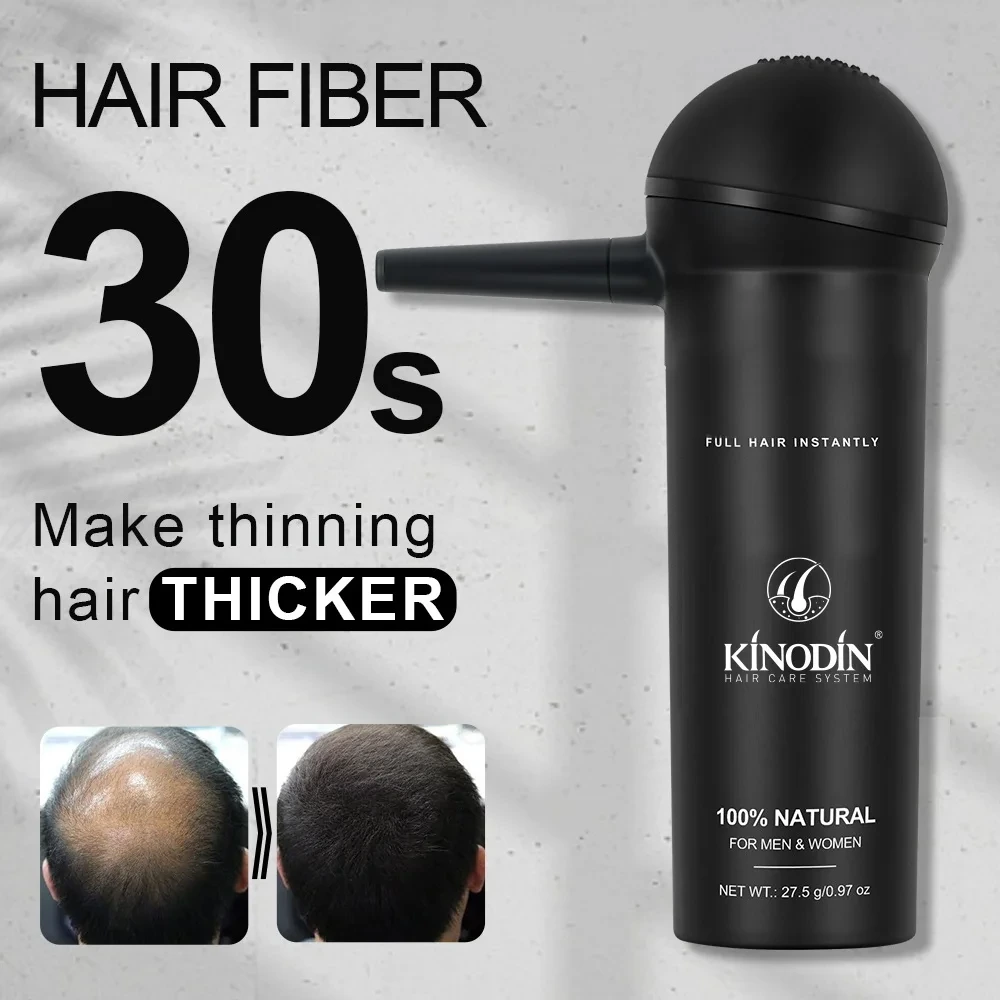
Private Label Custom Logo Hair Building Fibers
Private Label Custom Logo Hair Building Fibers
KINODIN develops custom logo hair building fibers for brands, distributors, salons and e-commerce retailers that need a coordinated private label product rather than an unbranded fiber bottle. Projects may include keratin-based or cotton-derived fibers, nine standard shade directions, selected net contents, compatible bottles and sifters, custom labels, direct bottle decoration, individual cartons, inserts and finished-pack quality checks. The material, colors, packaging and claims are approved as one commercial specification before production. Hair building fibers provide temporary cosmetic coverage and a fuller-looking appearance on areas with existing hair; they do not prevent hair loss or stimulate growth. MOQ, sampling and documentation depend on the selected project structure.
Why Keep a Custom Logo Hair Fiber Page?
The page serves a different buyer intent from material- or size-specific product pages. A buyer searching for custom logo hair building fibers is usually evaluating how an existing or selected fiber specification can be converted into a market-ready branded SKU. The key questions concern bottle decoration, color architecture, artwork, retail box, MOQ, sampling and consistency across repeat orders.
This makes branding and packaging the genuine point of differentiation. The page does not need unsupported organic, herbal or hair-loss-prevention statements. It complements KINODIN's broader private label hair building fibers portfolio without replacing the keratin, cotton, applicator or size-specific pages.
Four Private Label Packaging Routes
| Route | Typical components | Best suited to | Approval focus |
|---|---|---|---|
| Custom label | Existing bottle + pressure-sensitive label | Initial private label launches | Label size, adhesion, shade ID and compliance text |
| Custom label + box | Labeled bottle + individual printed carton | Retail and e-commerce presentation | Artwork hierarchy, insert, barcode and transport fit |
| Direct bottle decoration | Bottle printing or other approved decoration + cap | Established brands and coordinated lines | Ink adhesion, registration, rub resistance and color |
| Custom component program | Selected bottle color, sifter, cap, decoration and box | Larger or differentiated product programs | Tooling or component MOQ, color tolerance and lead time |
The final route depends on order quantity, number of shades, bottle availability, decoration method, artwork, cartons and commercial schedule. A low-volume label project and a directly printed custom bottle do not have the same MOQ or lead time.
Select the Correct Fiber Material First
Packaging should follow the approved fiber rather than hide an unclear material identity. Buyers may select keratin-based hair building fibers or cotton-derived hair building fibers according to brand positioning, target market, cost, texture and documentation requirements.
Do not describe a product as plant keratin or herbal keratin unless a real material with an accurate identity and specification supports that wording. Animal-derived keratin cannot be represented as vegan. Cotton origin does not automatically establish organic, certified natural or environmentally superior status.
Custom Logo Artwork Requirements
Artwork should be prepared against the actual bottle and carton dielines. The brand should supply an editable logo, color references, required languages, product name, material description, net content, directions, warnings, responsible-party details, barcode and destination-market information. KINODIN can review layout feasibility, but legal label responsibility depends on the project and market.
Very small text, gradients, metallic effects, reversed-out lettering and edge-to-edge designs require review for the selected printing process. The screen appearance of a logo does not guarantee the same result on a dark, curved or textured bottle. A physical decoration or packaging sample provides the approval reference.
Nine-Shade Brand Architecture
KINODIN's confirmed standard shade directions are Black, Dark Brown, Medium Brown, Light Brown, Dark Blonde, Medium Blonde, Light Blonde, Gray and White. A brand may launch fewer colors according to its target market, but every selected shade requires distinct identification on the bottle, cap, label, carton and shipping case.
A coordinated visual system can use shade names, color blocks, codes and barcodes while retaining consistent brand recognition. The artwork should avoid colors that look identical in low light or warehouse conditions. Physical fiber samples determine shade approval; printed swatches are navigation aids, not exact representations. Review KINODIN's hair concealer color matching process.
Bottle Capacity, Net Content and Sifter
Net content and bottle capacity must be checked with the selected fiber because keratin and cotton materials can have different bulk densities. A bottle that accommodates one fiber at a target weight may not provide suitable headspace or dispensing with another. The package should support the declared fill and controlled application throughout use.
Sifter-hole geometry, open area, bottle neck, insert fit, cap closure and fiber specification influence output. Evaluation may include tapping, flow, residue, blockage, closure cleanliness and access to remaining product. Net content should be selected within the broader product architecture rather than copied from another page.
Retail Box, Insert and E-Commerce Protection
An individual carton can provide space for directions, warnings, shade identification, brand story, barcode and market information. It should fit the bottle without excessive movement or compression. Inserts can be used when the pack includes an applicator, hairline tool, hold spray or more than one component.
E-commerce projects should consider handling, abrasion, label scuffing, cap loosening and carton deformation. A visually attractive box still needs practical transport protection. KINODIN's packaging development process can review the bottle, decoration and secondary pack together.
Optional Branded Product Extensions
A custom-logo fiber can be extended into a coordinated system using a manual hair fiber applicator, hairline optimizer, fiber hold spray or refill pack. Each extension should have a defined role and separate compatibility, labeling and quality requirements.
The loose fiber bottle should not inherit strong-hold, waterproof, sweatproof or all-day claims from a setting spray. Similarly, an applicator does not change the fiber material or create a treatment function. Product-system claims must match the exact components sold together.
Custom-Pack Quality Control
The approved master sample should combine the correct fiber, shade, net content, bottle, sifter, cap, decoration, label and carton. Repeat-order control depends on retaining material specifications, physical shade standards, artwork versions and component references.
| Control area | Example checks | Purpose |
|---|---|---|
| Fiber and shade | Identity, specification, batch traceability, appearance and physical color reference | Confirm the approved product inside the package |
| Filling and dispensing | Net content, fill level, headspace, sifter output and cleanliness | Control use and declared quantity |
| Logo decoration | Position, registration, color, adhesion, rub resistance and legibility | Protect consistent brand presentation |
| Shade identification | Bottle, label, carton, barcode and case-code agreement | Reduce mixed-shade and fulfillment errors |
| Finished retail pack | Closure, coding, artwork version, insert, carton fit and integrity | Release the complete branded SKU |
See KINODIN's quality control page for the wider process.
Claims and Artwork Boundaries
Appropriate wording may describe temporary cosmetic scalp concealment and the appearance of fuller- or thicker-looking hair. The product should not claim to prevent hair loss, treat alopecia, stimulate follicles, repair a hairline or grow facial hair. “For facial hair” should also be removed unless the exact use, safety assessment, instructions and destination-market position have been reviewed.
Organic, herbal, vegan, eco-friendly, completely undetectable, perfect match, waterproof, sweatproof, all-day, no-clumping, non-irritating and sensitive-scalp claims require specific support. Printing a claim on a custom label does not make it accurate; claim review must happen before artwork approval.
Documentation Support
Available documents may include material specifications, supplier information, colorant data, batch traceability records, finished-product specifications, certificates of analysis, safety data information where applicable, bottle and sifter specifications, packaging dielines, approved artwork and selected inspection records. Availability depends on the confirmed project.
Manufacturing certificates do not prove organic, herbal, vegan, environmental, scalp-safety or performance claims. The buyer remains responsible for trademark ownership, final label review, local responsible-party details, notification or registration and advertising compliance in the destination market.
Samples, MOQ and Lead Time
Sampling can progress from stock fiber and shade samples to packaging samples and a pre-production branded unit. A complete approval sample should show the selected material, color, net content, bottle, sifter, decoration, label and carton. Sample availability, cost and timing depend on the project stage.
MOQ depends on quantity per shade, fiber preparation, bottle, sifter, label, direct printing, cartons, inserts, accessories, testing and documents. Lead time begins only after the applicable components and artwork are approved. Review KINODIN's MOQ and sampling guidance.
Private Label Development Process
Define the brand brief
Confirm target market, channel, fiber material, shades, net content and packaging route.
Select product and components
Match the approved fiber with the bottle, sifter, cap, decoration and carton.
Approve shades and samples
Review physical colors, fill, output, label fit and selected packaging presentation.
Finalize artwork
Approve logo, shade coding, claims, directions, warnings, barcode and market details.
Produce and assemble
Prepare approved shades, fill bottles, apply decoration and assemble retail packs.
Inspect and release
Check product, shade ID, print, component count, artwork version and packaging.
Frequently Asked Questions
What can be customized with our logo?
Depending on the project, customization may cover labels, bottle decoration, cap or bottle color, individual cartons, inserts, shade coding and coordinated accessories.
Can we choose keratin or cotton fibers?
Yes. Material is selected according to brand positioning, target market, texture, cost and documentation requirements, then approved as part of the finished specification.
Is this an organic herbal product?
No organic or herbal status is assumed. Those claims require specific material identity, formulation evidence and any applicable certification for the finished product.
How many standard shades are available?
KINODIN's confirmed system contains nine shade directions. A brand may launch fewer shades or request custom matches after physical sample approval.
Can each shade use different artwork?
Yes, but the system should retain consistent brand elements while using clear shade names, codes, color blocks and barcodes to reduce selection and fulfillment errors.
Is direct bottle printing available?
It can be evaluated according to the selected bottle, printing process, colors, artwork and quantity. A physical sample should establish the decoration standard.
Can accessories be branded too?
Applicators, hold spray, optimizers, refill packs and kit boxes can be reviewed as extensions, subject to their own component and decoration requirements.
Do these products prevent hair loss?
No. Hair building fibers provide temporary cosmetic concealment and do not prevent shedding, treat alopecia or change hair growth.
What determines the MOQ?
MOQ depends on shades, fiber material, net content, bottle, sifter, decoration method, labels, cartons, accessories, testing and document requirements.
Build a Coordinated Custom Logo Hair Fiber Line
Send KINODIN your target market, fiber material preference, shade mix, net content, bottle or packaging references, logo files, retail channel, order quantity and document checklist. The team will review product selection, decoration route, sampling, artwork, packaging compatibility and quality requirements before confirming a proposal.
Email: sales@kinodin.com Contact KINODINProduct notice: Hair building fibers are temporary cosmetic concealers. A custom logo does not establish organic, herbal, vegan, environmental, treatment or performance claims. Material identity, shades, net content, bottle, decoration, directions, warnings, testing, artwork and documents must be confirmed for the finished product and destination market.
contact us
contact us for free sample !
Copyright © 2026 Foshan Younik Cosmetics Co., Limited. All Rights Reserved.